Track Shipment

Weekly Freight Report: June 19, 2026

June 18th, 2026


US Transportation Pricing Soars on Frontloading and Capacity Cuts

US Transportation Pricing Soars on Frontloading and Capacity Cuts

US transportation pricing is climbing even though freight demand is not booming. Growth in imports and manufacturing activity, combined with capacity that keeps exiting the market, has been enough to push truckload and ocean rates higher. Producer price indexes for truckload and LTL both jumped about 20% year over year in April, and spot truckload rates have set fresh records in recent weeks. A federal crackdown on non-domiciled CDLs and a Supreme Court ruling exposing brokers to negligence claims are thinning carrier ranks, so even modest demand is translating into stronger pricing. For shippers, that points to higher budgets and a real reason to lock in capacity early.

Overlapping Demand Waves Are Reshaping Peak Season: Rhenus

Overlapping Demand Waves Are Reshaping Peak Season: Rhenus

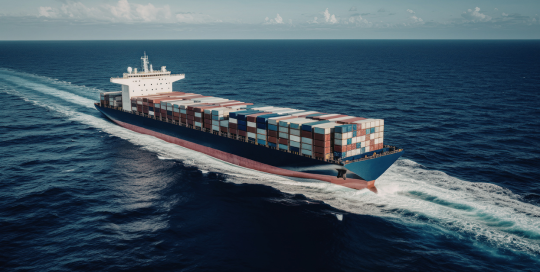
The predictable peak shipping season may be a thing of the past, according to forwarder Rhenus. Instead of one seasonal surge, the market is now seeing multiple overlapping demand waves as shippers pull volume forward at different points in the year. Vessel utilization from Asia to Europe, North America, and Oceania is running high, and the Shanghai Containerized Freight Index has risen roughly 81% on Asia to North Europe and 133% on Asia to US West Coast between the first and 24th weeks of the year. Rerouting around the Cape of Good Hope is tying up vessels longer and reducing available capacity, which amplifies rate volatility. The takeaway for shippers is to secure capacity earlier, diversify transport options, and treat planning as a continuous exercise rather than a seasonal one.

Trump Says He Would Prefer No USMCA Deal

Trump Says He Would Prefer No USMCA Deal

President Trump said this week he would rather the US not be part of the USMCA trade pact, though he stopped short of threatening to quit and added that he may still sign a renewal. Speaking in Paris after the G7 summit, he called the agreement’s future uncertain and said he could view it as expiring. The pact faces a July 1 renewal milestone. Without renewal it does not end immediately, but instead enters a rolling annual review for up to 10 years before potential expiration. The US is negotiating bilaterally, with talks with Mexico ongoing this week and formal talks with Canada not yet started. For shippers sourcing across North America, the uncertainty is a reason to revisit contingency plans now.

Maersk Warns Against Iran Charging Fees to Cross the Strait of Hormuz

Maersk Warns Against Iran Charging Fees to Cross the Strait of Hormuz

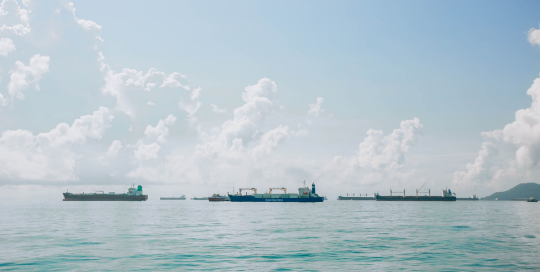
As the Strait of Hormuz moves toward reopening under an interim US-Iran peace deal, Iran has signaled it may charge fees on ships passing through the waterway, and the shipping industry is pushing back hard. The chief executive of Maersk, the world’s second-largest container carrier, warned that allowing such charges would set a dangerous precedent. Iran’s foreign ministry said it is not seeking transit tolls but would charge for services provided, a distinction maritime law experts question, since a natural strait requires little of the management that man-made canals do. Roughly 20% of the world’s seaborne oil and LNG normally moves through Hormuz, so any new per-transit cost would ripple across Gulf shipping. For shippers, reopening the strait is not the same as restoring normal, low-cost flows.

UAE Moves to Cut Its Strait of Hormuz Dependency to 'Zero'

UAE Moves to Cut Its Strait of Hormuz Dependency to 'Zero'

The United Arab Emirates unveiled a plan to eliminate its dependence on the Strait of Hormuz, regardless of whether the waterway fully reopens. The strategy centers on expanding the eastern ports of Dibba, Fujairah, and Khor Fakkan, which sit on the Gulf of Oman outside the strait, and pairing them with major new pipeline, rail, and road investment. The UAE is fast-tracking a second pipeline to double crude exports through Fujairah and is studying a third. Officials say the projects are still in the feasibility stage and would cost many billions of dollars, and redirecting commodities like LNG and aluminum will be harder than moving crude. For shippers, it signals a longer-term reshaping of how Gulf energy and goods reach global markets.

Federal Reserve Holds Rates but Opens the Door to a Hike

Federal Reserve Holds Rates but Opens the Door to a Hike

The Federal Reserve kept its benchmark rate unchanged at about 3.6% on June 17, but nearly half of its policymakers signaled they could support a rate hike later this year. That is a sharp reversal from March, when the committee forecast a cut and none expected an increase. The shift reflects inflation running at a three-year high of 4.2%, driven largely by higher gas prices tied to the Iran war, along with a May jobs report showing 172,000 positions added. It is the first meeting under new Chair Kevin Warsh, who trimmed the Fed’s forward guidance and projections. For shippers, the message is that the cost of capital is unlikely to ease soon and could rise, which matters for equipment, financing, and expansion decisions.

2026-06-18T14:20:56+00:00June 18th, 2026|Shipping News|
Go to Top