
Track Shipment

Weekly Freight Report: April 24, 2026

April 23rd, 2026


Trump Administration Opens $166B Tariff Refund Portal to Importers

Trump Administration Opens $166B Tariff Refund Portal to Importers

CBP launched the first phase of its Consolidated Administration and Processing of Entries (CAPE) system Monday at 8 p.m. ET, opening the door for importers to file for refunds on IEEPA tariffs the Supreme Court struck down in February. Up to $166 billion in duties may be recoverable, with valid refunds generally issued 60 to 90 days after an accepted claim. Phase one covers roughly 63% of affected filings, limited to entries liquidated or unliquidated within the past 80 days. Democrats have introduced legislation to require full refunds with interest, and the administration has until May to petition the universal refund order.

CBP Clarifies How Post Summary Corrections Work With CAPE Filings

CBP Clarifies How Post Summary Corrections Work With CAPE Filings

CBP has issued guidance on how post summary corrections (PSCs) interact with the new CAPE refund process. Entries accepted and attached to a CAPE claim are not eligible for PSCs, but unliquidated entries rejected from CAPE submission can be corrected via PSC and then resubmitted on a subsequent CAPE declaration. Entries for which a PSC has already been filed can still be accepted on a CAPE declaration. The mechanics matter: importers need to sequence their filings correctly to avoid losing refund eligibility on complex entries.

Commerce Sets Procedures for Lower Tariffs on USMCA Steel and Aluminum Used in Cars and Trucks

Commerce Sets Procedures for Lower Tariffs on USMCA Steel and Aluminum Used in Cars and Trucks

The Commerce Department released procedures April 22 allowing Canadian and Mexican steel and aluminum producers to apply for a 25% Section 232 tariff rate, down from 50%, on metals supplied to U.S. automobile and medium or heavy-duty truck manufacturers. Eligibility begins April 23 and requires producers to commit to new U.S. production capacity. Only primary steel and aluminum qualify, and only USMCA-preferential imports melted and poured, or smelted and cast, in Canada or Mexico are covered. Approved companies must submit quarterly shipment summaries and face reliquidation if commitments aren’t met.

Container Shipping Braces for Blank Sailings as Iran War Drags On

Container Shipping Braces for Blank Sailings as Iran War Drags On

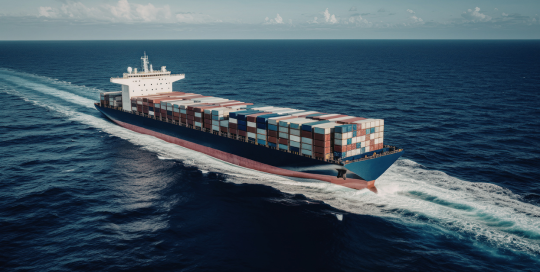
Carriers are preparing for blank sailings and softening demand as the Iran war enters its ninth week, with Strait of Hormuz transits dropping to single digits on some days. Executives said this week that a prolonged conflict could push the industry into deeper capacity cuts while also spurring investment in alternative Middle East port infrastructure. Spot rates on Far East to U.S. West Coast are up 29% since late February, and Europe and Mediterranean lanes are up 30 to 31%. Major carriers continue to route around the Cape of Good Hope.

Soaring Truck Rates Power Major Rebound in Domestic Intermodal Volume

Soaring Truck Rates Power Major Rebound in Domestic Intermodal Volume

Tightening truckload capacity and elevated spot rates are pushing shippers back toward intermodal rail, producing a sharp rebound in domestic volumes. Truckload spot rates are running roughly 20% higher year-over-year, tender rejections are hovering near 14%, and the carrier base is leaner after prolonged attrition. The jump shows how quickly freight can move to rail when truckload pricing increases, but whether that shift sustains depends on how railroads manage the surge in cargo.

De Minimis Suspension Still in Full Force, All Shipments Require Formal Entry

De Minimis Suspension Still in Full Force, All Shipments Require Formal Entry

As of April 2026, the $800 de minimis duty-free threshold remains suspended globally, with a February executive order confirming the suspension holds regardless of Supreme Court rulings on other tariff measures. Every commercial shipment, no matter the value, now requires formal customs entry through ACE, a 10-digit HTSUS classification, country-of-origin declaration, and full duty payment including the current 10% global surcharge. Postal parcels from China and Hong Kong currently carry a 54% tariff, and at least 88 national postal operators have suspended U.S.-bound service at some point during the transition.

2026-04-23T23:55:45+00:00April 23rd, 2026|Shipping News|
Go to Top